

From Courtrooms to Constitutions: Transforming Reproductive Rights into Reproductive Justice
24th March 2026
Last week, as government representatives and civil society convened in New York for the 70th Session of the Commission on the Status of Women (CSW70), SheDecides was on the ground to ensure sexual and reproductive health and rights (SRHR) remain at the heart of the conversation.
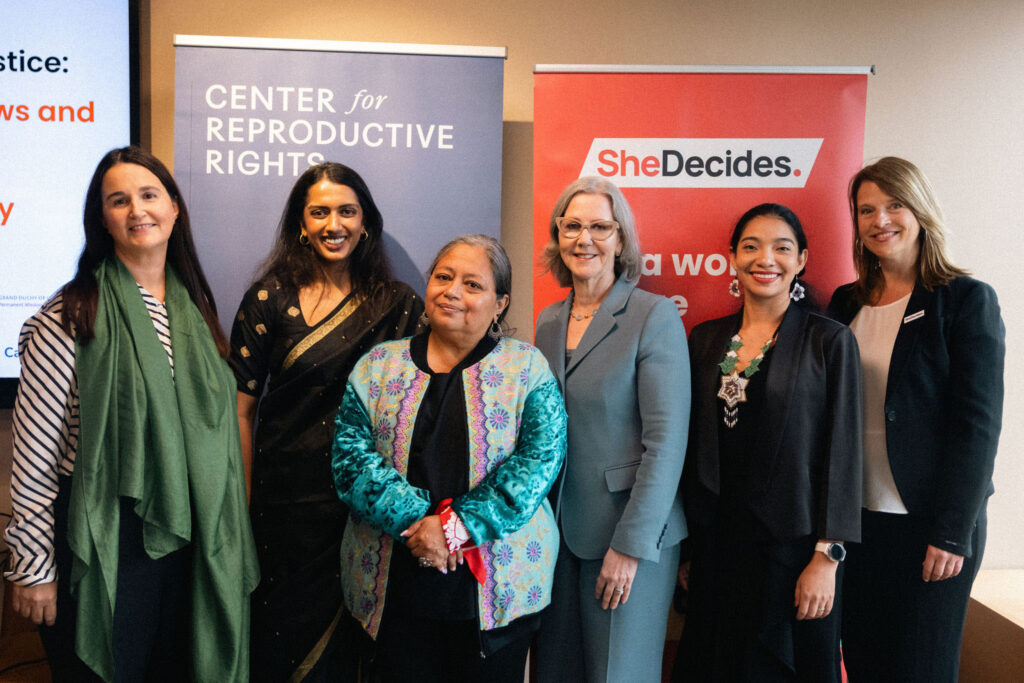
At this key global forum for gender equality we hosted a series of events to keep SRHR high on the political agenda, reinforcing that bodily autonomy is a non-negotiable foundation for gender equality.
In this spirit, SheDecides partnered with the Center for Reproductive Rights and the Governments of Norway, Luxembourg, and Colombia to host a critical dialogue: “Advancing Reproductive Justice: Eliminating Discriminatory Laws and Protecting the Right to Bodily Autonomy.”
The event, held at the Permanent Mission of Norway, brought together over 80 participants—including youth advocates, legal experts, and policymakers—to address a fundamental truth: there can be no true access to justice without reproductive freedom.
Reproductive Justice: A Mandate for Equality
Linked directly to the CSW70 priority theme of strengthening access to justice, the session unpacked the structural and legal barriers that continue to deny millions their fundamental rights.
Reproductive justice requires more than the absence of restrictive laws; it demands a world where every person has the power and resources to make autonomous decisions about their bodies. This must be supported by just, equitable policies grounded in human rights and upheld through inclusive legal systems.
As Nancy Northup, President of the Center for Reproductive Rights, noted:
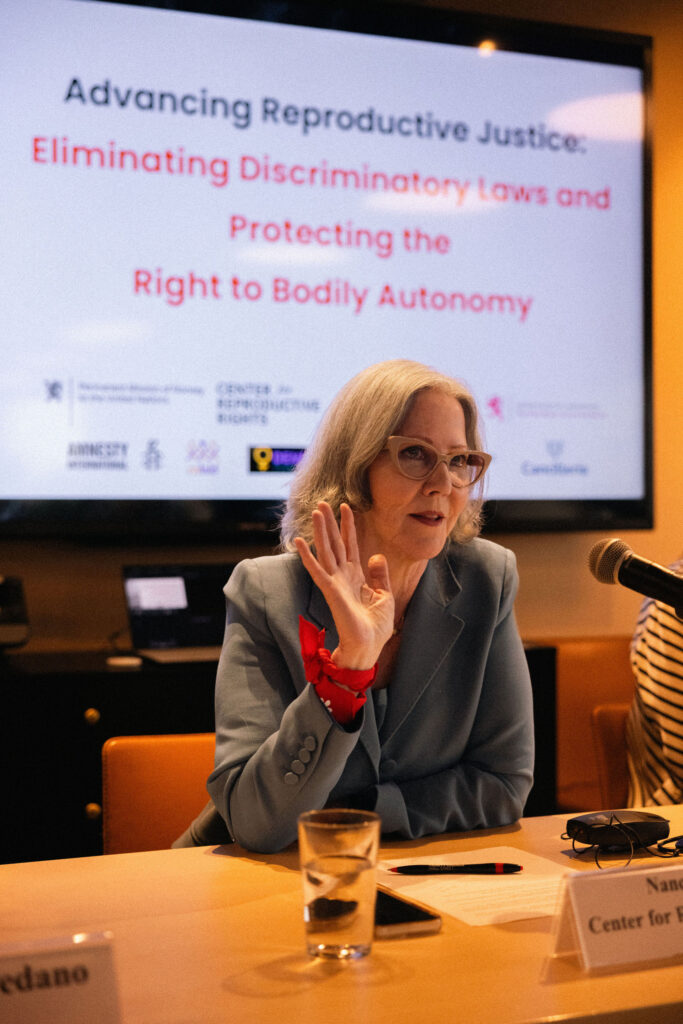
“Over thirty years ago, governments came together to ensure that all women and girls have rights to equality, dignity, and to make decisions about their own bodies and futures. That mandate is as urgent today as it was then. Hard-won legal reforms are being challenged, and rights once affirmed are being undermined. The harms of these rollbacks ripple outward, isolating women and girls and denying them access to justice. The 70th convening of the Commission on the Status of Women is a recommitment to ensuring that courts listen and governments are pushed to meet their obligations for equitable access to justice for women and girls across the world.”
The Power of Law and Strategic Litigation
The discussion highlighted that legal systems are not just frameworks – they are essential tools for securing and expanding rights. Through strategic litigation, feminist movements are successfully dismantling barriers and holding states accountable for SRHR violations. The panel highlighted several transformative examples:
- Challenging Forced Sterilisation: María Ysabel Cedanoto of DEMUS, spoke of the landmark efforts to seek justice for victims of forced sterilisation in Peru.
- Decriminalising Youth: Vandana Venkatesh, Enfold, highlighted the urgent need to reform Indian legislation that criminalises young people for consensual sexual activity, illustrating how laws must evolve to protect – rather than punish – the rights of youth.
- Addressing systemic discrimination: Jovana Ríos Cisnero of Women’s Link Worldwide spoke of how to use strategic litigation to address unequal access to services and the irreparable damage caused by restrictive abortion frameworks.
- Movement-Led Legal Change: Fernanda Doz Costa,Amnesty International spoke to the transformative strength of human rights and feminist movements working in tandem with legal expertise. They highlighted how the “Green Wave” has successfully pushed for the decriminalisation of abortion across Latin America, and continues the vital work of securing the release of women unjustly incarcerated for miscarriages or obstetric emergencies.
Leadership in Policy and Parliament
Beyond the courtroom, parliamentarians play a decisive role in proactive change. Political leadership can transform reproductive choice from a contested issue into a protected legal reality.
A historic example of this leadership was shared by Hon. Mandy Minella, Member of the Luxembourg Chamber of Deputies. Her intervention underscored a monumental milestone: Luxembourg recently became the second country in the world to enshrine the right to abortion in its constitution. This move serves as a global beacon, proving that political will can provide the highest level of legal protection for reproductive choice. This is especially vital in a climate of increased attacks on bodily autonomy.
Stine Renate Håheim, State Secretary for International Development for the Government of Norway, added:
“When the rights and health services provided to women, girls and sexual minorities are weakened, it is the poorest who are hit first and hardest. Ensuring sexual and reproductive health and rights is key for equality and prosperity. Discriminatory laws and practices must be abolished. Building alliances is vital for defending and safeguarding the global SRHR framework. We stand stronger together.”
The event concluded with a call to action from Karin Nilsson, Executive Director of SheDecides:
“Changing unjust laws requires political leadership, courageous parliamentarians and lawyers, strategic litigation, and the persistence of feminist movements and legal advocates. There can be no meaningful access to justice when people are criminalised for exercising control over their own bodies.”
As we move forward from CSW70, we carry the momentum of this session to ensure that legal systems worldwide—from the courtroom to the parliament floor—protect, rather than penalise, the right to decide.
Jovana Ríos Cisnero, Executive Director of Women’s Link Worldwide, shared a message of resilience:
“Today I am leaving this space with a lot of hope. Hope based on what we CAN achieve through strategic litigation and how we are dismantling barriers to access justice.”