

What can we agree on for a sustainable development? Reflections around CPD59
28th April 2026
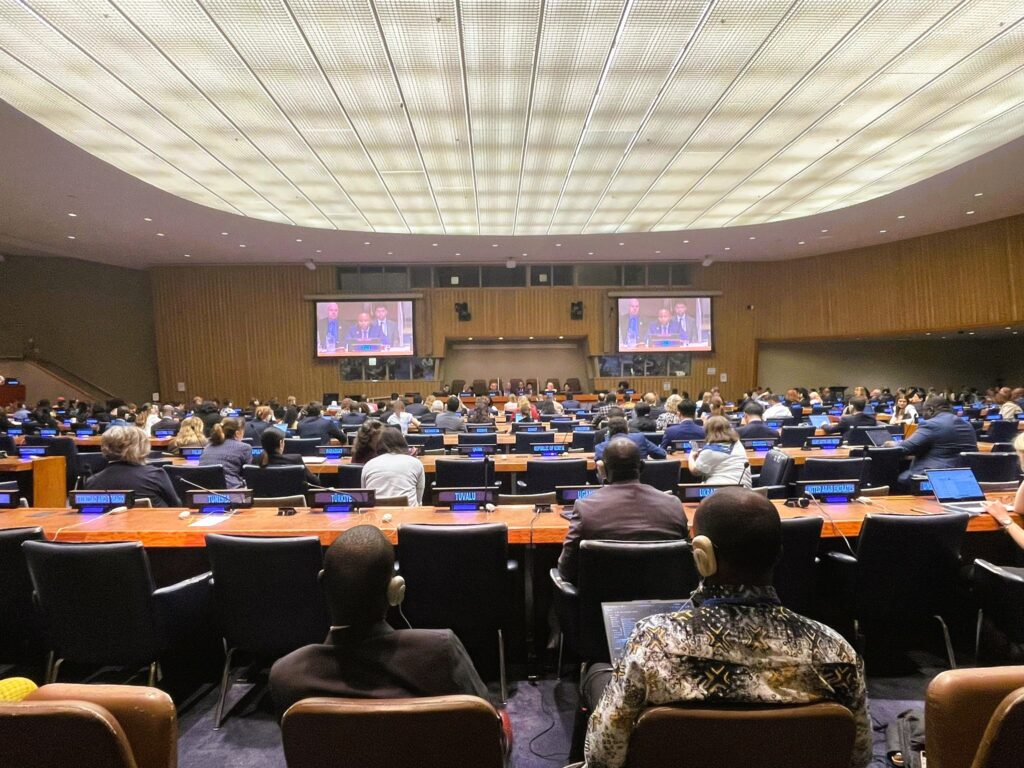
Last week, UN Member States, civil society, researchers and youth leaders gathered for the 59th session of the Commission on Population and Development (CPD) to advance the ICPD Programme of Action. This year’s focus - Population, technology and research in the context of sustainable development – sparked both optimism and tension. SheDecides followed the discussions taking place at the UN in New York.
Technology: hope and risk
Across discussions, innovation, technology and research were widely recognised as power drivers of progress. Telemedicine, AI-assisted diagnostics and mobile health platforms are expanding access to essential health services and information, including SRHR. Research and data-driven policies are helping prevent maternal deaths, improve care, and make previously invisible needs visible.
But technology is not neutral – and without a rights-based approach it risks reinforcing the very inequalities it promises to solve. Delegates highlighted widening digital divides, gaps in access and literacy, and the rapid spread of mis-and disinformation. Online spaces are increasingly the sites of harassment, abuse, censorship and stigma, particularly impacting women, girls and LGBTQI+ people. The governmental negotiations in New York surfaced important debates around technology and power: who designs technology, who has access, who controls information, and whose rights are protected.
Innovation and technology serving all
A consistent message emerged: innovation must be grounded in human rights. Stronger safeguards and regulation are needed to ensure AI platforms, new technologies and digital spaces, are safe, inclusive and trustworthy. As UNFPA’s Executive Director Diene Keita put it, technology must “build bridges to progress, rather than walls that keep the vulnerable out.” Rights, choice and dignity must guide every policy and digital innovation”.
Political pushback – and resolve
Alongside these discussions, negotiations at CPD revealed growing political divisions. Some Member States challenged commitments to multilateralism, gender equality, human rights, SRHR, including limiting the rights of LGBTQ persons and promoting narrow definitions of “family”. Disagreements on technology transfer, intellectual property rights and the right to development, further stalled progress.
In the end Member States failed to reach consensus on an outcome document – a widely acknowledged missed opportunity
Yet, as Keita noted “The absence of a final document does not diminish the urgency of this agenda”. It sharpened it, and fuelled a political will to not back down on the commitments to ICPD and the SDGs.
Cross-regional unity in a divided moment
Despite tensions, there were clear signs of alignment. The week began with an opening cross-regional statement delivered by Lebanon on behalf of 57 countries, highlighting the linkages between the CPD59 theme of population, technology, and research, and sexual and reproductive health and reproductive rights. The week concluded with a closing cross-regional statement delivered by Tonga on behalf of 38 countries, which reaffirmed the importance of ICPD and CPD as essentials pillars of multilateralism. The closing cross-regional statement underscored the critical relationship between SRHRR and all aspects of sustainable development.
Governments across regions emphasized the need for multilateralism, partnership and rights-based approaches to technology. They reiterated their commitment to the ICPD Programme of Action, signalling that political leadership remains strong.
Moving Forward
CPD59 exposed a divide between those pushing to restrict rights, and those committing to advancing them. It also showed that the latter group is larger, more coordinated, and determined not to back down.
In a time of global fragmentation, the message from CPD59 is clear: we move forward only by standing firm together across regions on SRHR, and by ensuring that rights, choice and dignity are equally sustained for all.
SheDecides governmental Champions aligned to the cross-regional statements and reaffirmed their national commitments to the ICPD PoA and to multilateralism . Political leadership matters and inspires to action.
The following excerpts from their statements showcase examples of political leadership demonstrated at CPD.

Belgium
“Allow me to underscore Belgium’s full and continued commitment to the ICPD Programme of Action, to sexual and reproductive health and rights, to gender equality, and to human and women’s rights. In various fora, we are witnessing a deliberate and coordinated pushback—against sexual and reproductive health and rights, against gender equality, against the universality of human rights, and ultimately against multilateralism itself. These are political choices that seek to roll back hardwon progress and weaken the international rulesbased order we have collectively built, reinforced, and endorsed. Let us be clear: human rights are not optional. They are enshrined in the Charter of the United Nations and bind all Member States without exception. At a time when multilateralism is openly challenged, Belgium chooses a constructive path. We firmly believe that dialogue, cooperation, and a strong rules based technology and innovation can play a transformative role in accelerating progress—but only if they are firmly anchored in rights and supported by adequate governance”.

Germany
“At its core, the ICPD agenda affirms that human rights, gender equality, and the empowerment of all individuals are essential drivers of inclusive and sustainable development. At a time of growing global challenges, it is more important than ever that we reaffirm our shared commitments. Germany remains firmly committed to advancing the rights and dignity of every individual, in particular those in vulnerable and marginalized situations. We firmly believe in the value of multilateralism and that only together can we meet today’s global challenges and achieve sustainable development. Together with our multilateral partners and civil society, we will continue to work towards the full realization of the Agenda2030, including through the responsible advancement of research and technology.”

Netherlands
The Kingdom of the Netherlands reaffirms its commitment to the Program of Action of the International Conference on Population and Development. This agenda remains of crucial importance in advancing sexual and reproductive health and rights, while putting people’s dignity and rights at the heart of sustainable development. This 59th session of the CPD showed both the strength and the necessity of a continued commitment to the agenda. A large number of member states underlined the need for better governance of online platforms, in order to advance human rights. Marginalized groups, such as lgbtiq+, are the first to be exposed to online harassment. Gender inequality is particularly evident on online platforms. States are under an obligation to protect human rights both online and offline. The lack of a negotiated outcome does not mean that the commitment to multilateralism and the CPD is wavering. The opposite holds true and the Kingdom of the Netherlands is committed to contributing to and further strengthening the UN system and the CPD in particular.

Norway
“The ICPD programme of action is a foundational component of Agenda 2030. In this regard, we are deeply concerned by attempts to undermine the Sustainable Development Goals and the rights of women and girls and LGBTI+ people. We are many governments and partners in civil society that stand together to protect these rights and fundamental freedoms – standing united in our commitment for gender equality, bodily autonomy and sexual and reproductive health and rights. Norway remains committed to ensuring inclusive and sustainable development. As our Minister of International Development said in his statement this week, we call on all states to re-commit to multilateralism, to the Charter of the United Nations, and to the Universal Declaration of Human Rights.’

South Africa
“For South Africa, the ICPD Programme of Action remains a balanced and forward-looking framework precisely because it recognises that development must be people-centred, inclusive and grounded in dignity. South Africa underscores that, the right to development, sexual and reproductive health rights, gender equality, and support for families and communities are all integral to sustainable development. They are not separate tracks. They are part of the same development project aimed at improving the lived realities of people, especially those facing poverty, inequality, exclusion and limited access to services and opportunity. Technological progress must narrow, not widen, the divides between and within countries. For developing countries in particular, this means that the global conversation on technology must also address equitable access, capacity-building, financing, and the removal of structural barriers that prevent the full participation of all in the benefits of innovation. If technology is to serve development, it must be shaped by justice, inclusion and shared responsibility. South Africa remains convinced that the strength of this Commission lies in its ability to uphold multilateralism and to preserve a holistic understanding of development.”

UK
“Sexual and reproductive health and rights are fundamental to gender equality, global health, democracy, and economic development, yet access to information and services remains uneven. When women and girls can make informed choices about their bodies and lives, societies are healthier, economies stronger, and development more inclusive. The evidence is clear: investment in SRHR delivers lasting gains across generations. We reaffirm our full commitment to the ICPD Programme of Action and its rights-based approach. We should leave this session determined not to retreat, but to renew our efforts ahead of future sessions of this Commission”
Other joint statements:
Brazil, Colombia, Mexico, Uruguay and South Africa stressed in their joint statement the importance of safeguarding human rights in the development and use of new technologies. They equally reaffirmed the recognition of the principle of solidarity and gender equality aimed at reducing inequalities, closing gaps and helping to build the material and institutional conditions – as indispensable for the realization of those same rights in developing countries. Without these commitments and international cooperation, including the transfer of technology in fair terms, they stressed that a human rights-based approach risks being deprived of the concrete means required for its implementation, and pointed to that human rights and development are intrinsically linked.
The European Union pointed to the need to build a world free from sexual and gender-based violence and harmful practices. They further stressed that for technology to be beneficial to all, it must align with human rights and uphold the principles of non-discrimination and gender equality, in particular for women, girls, adolescents and marginalised communities, and underscored that strong safeguards need to be in place to eliminate technology-facilitated gender-based violence.