

SRHR Under Pressure: Reflections from the World Health Summit
3rd November 2026
With political and financial pressure rising, sexual and reproductive health and rights (SRHR) around the world face new and persistent challenges. Countries must achieve more with less, which calls for innovative, cost-effective and rights-based approaches to protecting SRHR strategically. At the 2026 World Health Summit, SheDecides and Germany’s BMZ co-hosted a high-level plenary bringing together leaders from across government, regional institutions, multilateral agencies and civil society to explore what this looks like in practice and which lessons can pave the way forward.
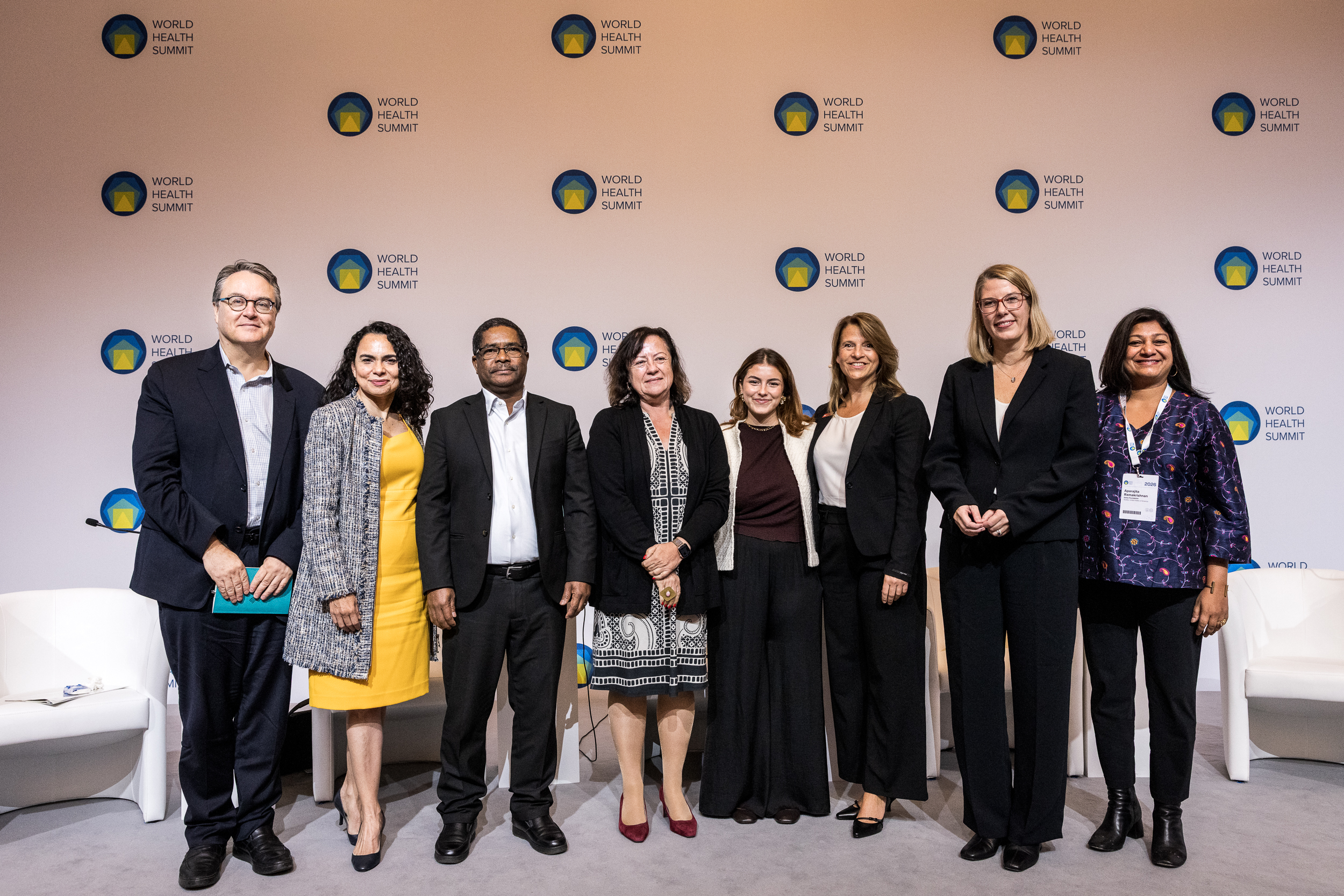
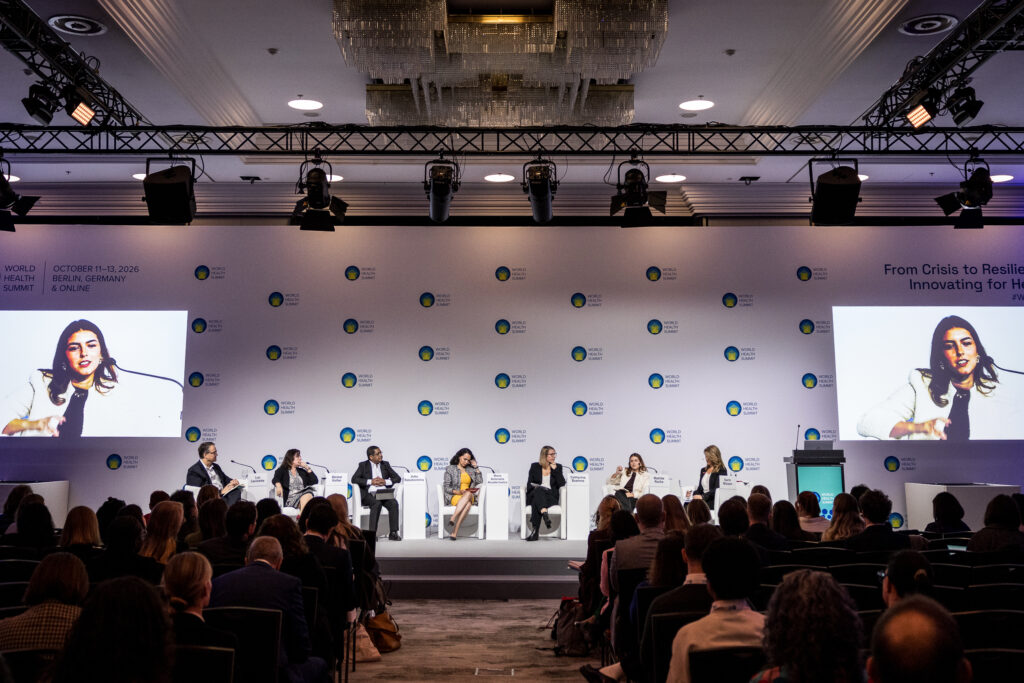
Last month, the World Health Summit gathered over 4000 leaders in Berlin, where key conversations shaping global health took place. The plenary “SRHR Under Pressure: Advancing Innovation for a Changing World”, co-hosted by SheDecides and the German Federal Ministry for Economic Cooperation and Development (BMZ), explored what actually works for SRHR delivery and how stronger health outcomes can be achieved innovatively with the resources available.
The session brought together leaders from across government, regional institutions, multilateral agencies and civil society to explore a diverse range of political, financing and implementation perspectives. It highlighted the importance of championing diversified innovations including strong partnerships, strategic investments, and community-driven solutions to strengthen health systems and keep SRHR a priority. Karin Nilsson, She Decides’ Executive Director, moderating the session, opened with the reminder that: “The need for innovative, strategic and cost-effective approaches is more pressing than ever and all efforts, all partners are needed to bridge the gap.”
Germany announced €10 million for the Global Financing Facility Sustainability Commodity Access Programme, one of several contributions that reflect its continued political support for SRHR. Dr. Bärbel Kofler, Germany’s Parliamentary State Secretary at the BMZ, shared: “My one priority is to embed SRHR into resilient primary health care through country-led plans and budgets – backed by predictable financing and delivered with and for communities. We need to invest in people and systems – frontline providers, supply chains, and public goods – so that quality SRHR services are provided at the primary care level.”
Innovative Financing Approaches
The panel discussion unpacked how innovative financing approaches can be strategic ways to improve long-term sustainability as well as national ownership.
Proffesor Julio Rakotonirina, the African Union Commission’s Director for Health and Humanitarian Affairs, underlined that “SRHR cannot be fully realized without adequate, sustained, and equitable investment. Preventing maternal deaths, expanding access to family planning, and ensuring quality, adolescent-responsive services require strong health systems and sustained public financing.” adding that, “Investing in SRHR is not simply a health priority. It is an investment in human dignity.”
Dr. Catharina Boehme, Deputy Executive Director of the United Nations Population Fund (UNFPA), shared UNFPA’s three-pronged approach: linking country presence and trusted partnerships with governments, working with governments on evidence-based plans, and brokering financing. She stressed that, “Investing in women’s reproductive health is not just the right thing to do. It is also one of the smartest investments we can make. Every dollar invested can generate up to $71 in economic and social benefits. The challenge is not always a lack of money, but getting it to where it can make a difference. That is where UNFPA comes in: bringing governments, investors and partners together to turn commitments into real services that women can access.“
International Planned Parenthood Federation’s Director General, Maria Antonieta Alcalde Castro, underlined: “When funding is cut, the need does not disappear. Women do not stop needing contraception. Pregnancies do not stop. Violence and conflict do not stop. Young people do not stop needing information, care and protection. Funding can disappear overnight. Need does not. So, governments must protect essential sexual and reproductive health services in national plans, budgets and health-benefit packages and create formal accountability spaces with civil society’s meaningful participation.” She added, “genuine partnership requires funders’ risk appetite to match the courage of frontline actors.”
Luc Laviolette, Head of Secretariat at the Global Financing Facility for Women, Children and Adolescents (GFF), shared the collective success that the 36 countries supported by the GFF have been able achieve: “They’re all reducing mortality, and we estimate that in that 10 years 385 million unintended pregnancies were averted.” To accelerate this progress, he highlighted GFF’s continued commitment through:
- The S-CAP Programme provides $250 million in funding from the Gates Foundations and CIFF. With each dollar of grant funding matched by three dollars in domestic resourcing, it could lead to a billion dollars more in funding for commodities (with a focus on system strengthening) in the coming years.
- The Innovation Challenge Programme supports governments to adopt, scale-up, and finance innovations.
Looking forward, he emphasised that scaling-up should be a key priority: we need to do more with more!
“Particularly when it comes to adolescent SRHR, we see quite a lot of growth in the number of countries that are actually working on this, but the scale is not there yet. We need to be reaching a lot more adolescents collectively.”
Community at the Centre of Innovation
Beyond financing, community-led approaches and practical capacity-strengthening measures can drive progress on SRHR and improve service delivery.
On this, Dr. Bärbel Kofler, Germany’s Parliamentary State Secretary at BMZ, highlighted the complicated geopolitical landscape governments are navigating:
“We see international backlash. We see countries who were once supportive are not supportive anymore, we see geopolitical fragmentation, we see also that countries who want to work in favour of sexual reproductive health and rights are sometimes pressed economically not to do so.”
In response, she urged governments to collaborate with multilateral organisations and civil society, especially youth organisation, and to support advocacy efforts:
“I think it’s important to advocate: to stand tall on the topics of sexual and reproductive rights. I’m underlining the rights, because it’s about lives. It’s not only the right thing to do, it’s the smart thing to do. We know that there are so many societies that could do much better if women would have a fair chance in life to participate in economy, in society, in politics, and if you want them to do so, there need to be basic decisions made rightly. And those decisions have to do with the autonomy about their own body and health. We need to change the narrative in all our societies. We need to see that with an optimistic approach, and with the work of all of us, we can make a difference for the lives of people.”

The importance of working with youth was also underscored by Matilde Rocha, Liason Officer for SRHR Issues at the International Federation of Medical Students Associations (IFMSA):
“There is enough evidence that tells us that health outcomes improve when we engage young people in the decision-making processes. There is more trust in the public health system. There is more responsiveness in the policies that we create. Another thing is representation: we know that almost 50% of the population is under 30 years old. When we look at our decision-making structures, this is not the representation that we see at all.”
Rather than asking how to engage young people, Matilde invited partners to take a step further and instead ask young people directly the tough SRHR policy questions they are capable and willing to respond to.
In a short intervention, Aparajita Ramakrishnan, Director for Family Planning at the Gates Foundations, left a question to take forward the conversation beyond the session: “It does feel important that we don’t lose track of reproductive health. What can we do to make sure it doesn’t get left behind as we evolve financial structures and as countries evolve their priorities?”
All in all, the World Health Summit session made clear that protecting SRHR in a time of shrinking resources depends on innovation, and that innovation cannot sit with one sector alone. Governments must innovate how they budget and legislate; multilaterals and financing partners must innovate in how they structure and match investment; and civil society and young people must innovate in how services reach communities. Progress depends on all of these moving together. Doing more with less, without losing sight of rights, calls for sustained political leadership, a willingness to stand in solidarity and take risks where needed, and a shared commitment to keep SRHR firmly on the agenda.