

The Right to Decide: New Investments, Continued Commitment at UNGA81
8th October 2026
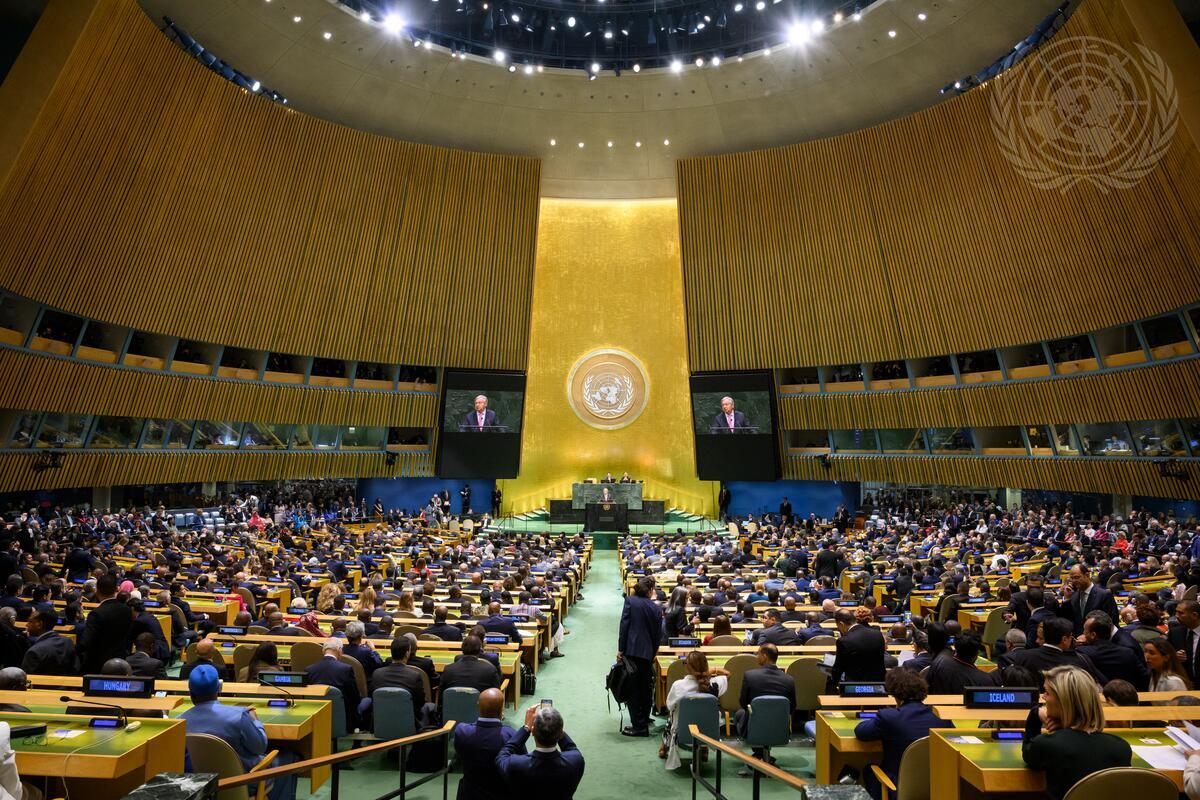
With only four years left to achieve the Sustainable Development Goals, world leaders and policymakers gathered in New York for the 81st session of the UN General Assembly (UNGA). While bodily autonomy, gender and sexual and reproductive health and rights (SRHR) did not explicitly feature in Member States’ official statements across the board, they did have everything to do with the issues that made it to the top of the agenda – and UNGA remained a space for much-needed funding announcements.
In his opening speech, the President of UNGA’s 81st edition, H.E. Dr. Khalilur Rahman, noted: “With only four years left to achieve the 2030 Agenda, and just 36% of SDG targets on track or making moderate progress, the gap between ambition and delivery is far too wide.”
His call to accelerate action for sustainable development was echoed in government speeches during the General Debate. Much of it focused on conflict, climate and tech – all pressing issues that have made headlines across the globe. However, governments and partners steadily made the case that gender equality, supporting those most in need, and upholding health and human rights are essential to realise progress on these issues and on sustainable development as a whole.
Holding the line for gender equality and the right to decide
At the current rate, gender equality will only be achieved in 171 years and none of the current SDG gender indicator targets are on track, according to the 2026 Gender SnapShot UN Report. The increasing danger that human rights pushback poses to women, girls and communities on the margins was highlighted in numerous speeches – including the opening speech of UNGA’s President: “Hateful narratives are spreading like wildfire, wildfire across borders and into homes at unprecedented speed and scale. They target women and girls, minorities, migrants, refugees and persons with disabilities, often for political gain.”
Importantly, the UN Secretary General flagged threats to the right to decide: “Everywhere. Women and girls continue to face discrimination violence, exclusion and abuse around the world. Their rights are being rolled back, their voices silenced, their bodies turned into battlegrounds and their freedoms treated as bargaining chips.”
H.E. Thorgerdur Katrín Gunnarsdóttir, Iceland’s Minister for Foreign Affairs, also noted: “Too often these movements target groups whose rights supposedly matter less: women, LGBTQI+ people, minorities, migrants, people who look different, love differently, or live differently … I am deeply concerned by the growing backlash against gender equality and LGBTQI+ rights, including within my own region, Europe.”
Furthermore, H.E. Anita Anand, Sweden’s Minister for Foreign Affairs, and SheDecides Champion reminded that:“Rights, once gained can be lost. Freedoms do not defend themselves. It is up to us to protect them. For women and girls everywhere and for generations to come.”
Meanwhile H.E. Micheál Martin Taoiseach, Ireland, underlined the link to gender equality and the rights of LGBTQI+ people: “Women and girls face conflict related sexual violence, forced displacement, trafficking and discrimination across the world. LGBTQI+ people face growing threats to their rights, safety and dignity.”
Global champions for bodily autonomy and sexual and reproductive health and rights were vocal in their support. In their General Debate speeches SheDecides Champions spoke up for the right to decide: Canada underlined continued support to “to promote gender equality and the rights of LGBTQIA persons”, and Sweden shared:
“Sweden remains firm in its defence of the UN’s normative mandates on human rights, gender equality, and sexual and reproductive health and rights. Everyone has the right to live freely and with dignity, to be who they are and to love whom they choose.”
UNFPA Financial Pledges
Beyond the podium, commitments were backed by money as UNGA’s sidelines became a platform for announcing much-needed investments. One such event was UNFPA’s high-level event, where over $715 million was pledged by governments and partners.
The United Kingdom pledged £254 million of the total, making it the ‘largest single government investment’ in reproductive health supplies in 2026. Ms. Kirsty McNeill, Minister for Development, United Kingdom:
“It is a scandal that women and girls are denied the fundamental right to make informed choices about their own body, free from coercion, discrimination and violence. Every woman and girl should be able to make decisions about her own future. That choice can mean staying in school, finding work or surviving childbirth. The funding I have announced today will help give millions more women and girls across the world autonomy over their bodies, control over their futures, and the chance to fulfil their full potential.”
Alongside the UK, SheDecides Champion Norway and Denmark also pledged their support (respectively, $22.6 and $53.6 million). Ms. Elsebeth Søndergaard Krone, State Secretary for Development Policy, Denmark:
“The lack of access to safe, affordable reproductive health commodities stands as a primary barrier to health equity around the globe. It has a negative impact on women’s right to decide over their own bodies […] This is why UNFPA’s core mandate – to promote sexual and reproductive health and rights – continues to be not only relevant but increasingly essential.”
Importantly, the event showed African countries stepping up their investments – with Burundi, Madagascar, Mozambique and Zimbabwe accounting for approximately 40% of the US$715 million pledged.
Reflecting on the commitments made, Diene Keita, Executive Director of UNFPA, shared: “Today’s commitments send a powerful message: investing in women and girls is the foundation for a prosperous and equitable future. Enabling their rights and choices is one of the smartest investments in development. Longstanding partners are standing firm, new ones are stepping up, and together we are changing lives”.
Read more here about the pledges made on UNFPA’s channels
All in all, the 81st session of UNGA was marked by a collective recognition that the world continues to be shaped by both persistent and emerging challenges. Whilst critical questions around the potential merger of UNFPA and UN Women remained unanswered, it remained a space for champions and partners to remain vocal and show their commitment to upholding bodily autonomy and SRHR – guided by the understanding that when she decides, everyone benefits.