

From Rights to Reality: Putting Safe Abortion on the Map at the 79th World Health Assembly
5th June 2026
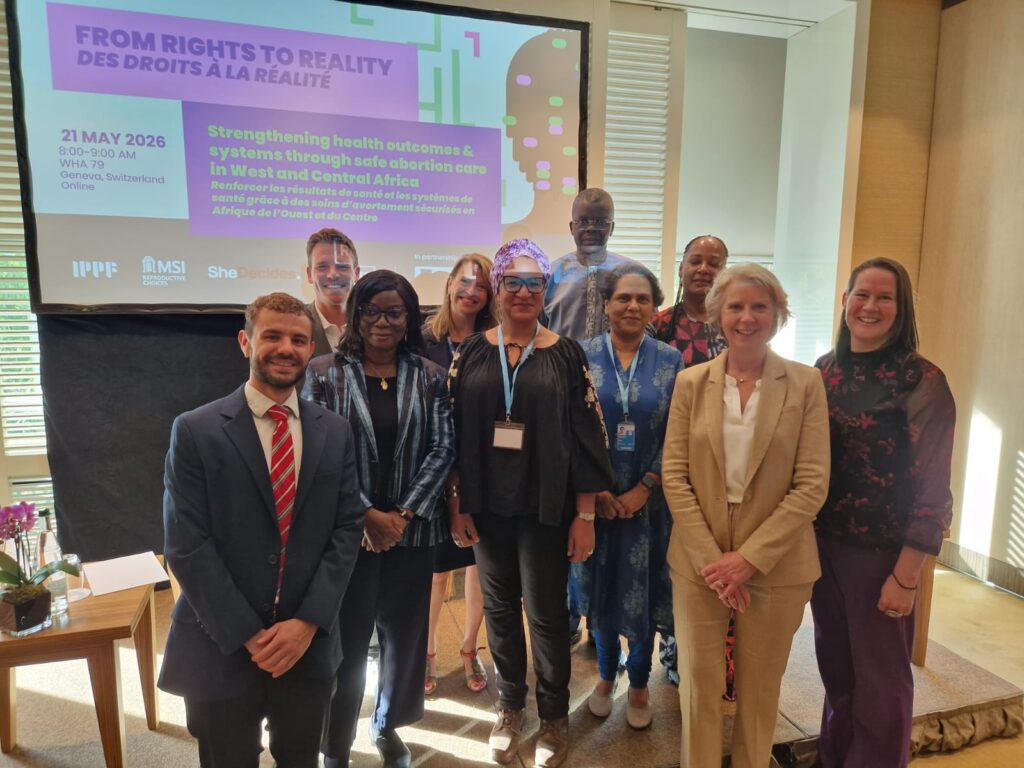
Last week on the sidelines of the 79th World Health Assembly in Geneva, a high-level side event brought attention to a critical but often sidelined issue in global health: access to safe abortion care. As the only abortion-focused event at this year’s assembly, the session, “From Rights to Reality: Strengthening health outcomes and systems through safe abortion care in West and Central Africa”, sent a clear message: health for all is impossible without access to safe abortion care.
Lisez cet article de blog en français
Organised by Rutgers, SheDecides, MSI Reproductive Choices and the International Planned Parenthood Federation (IPPF), and in collaboration with the governments of Benin and the Kingdom of the Netherlands, the event spotlighted regional leadership from West and Central Africa, shared new research on where gaps to access remain, and emphasised the political will needed to turn policy into practice.
Putting Evidence and Experience at the Centre
Luc Lauwers, Deputy Director of Rutgers, kicked off the discussion. While acknowledging unprecedented challenges to reproductive health worldwide, he reminded the room of the importance of grounding work in reality:
“It is critical to re-centre this conversation on the lived experiences and needs of women and girls, on research evidence, and on guidance provided by the World Health Organization… This event aims to do exactly that, spotlighting research from our She Makes Her Safe Choice programme, while focusing on progress, leadership, and solutions emerging from West and Central Africa.” Karin Nilsson, SheDecides Executive Director, followed and noted that “expanded access and choice do not happen by chance” – they require deliberate political leadership.
Ambassador Erica Schouten, Permanent Representative of the Netherlands to the UN. WTO and other international organisations in Geneva, delivered keynote remarks and acknowledged her country’s long-standing partnership with Benin: “As the Netherlands, it’s our honour to co-host this event together with Benin, a country that is showing strong regional leadership in combating maternal mortality.”
Following on, Françoise Sybille Assavedo, Deputy Director of the Cabinet for Benin’s Ministry of Health, highlighted her country’s landmark policy shifts. In 2022, the government expanded the legal grounds for abortion to protect women’s health, creating one of the most progressive laws in Africa, at a time where many countries were rolling back rights. She shared: “For Benin, we have moved from words to action… And our goal to reduce preventable maternal deaths due to unsafe abortion to zero is of the utmost importance… Benin wants to provide equal access to health.”
Highlighting WHO’s Safe Abortion Guidelines
Bela Ganatra from the World Health Organization (WHO) emphasised that the barriers to safe abortion are not medical or scientific, but political and social. “Scientifically speaking, there’s very little to hinder progress to access safe abortion,” Ganatra explained. “The barriers lie in politicisation, stigma, and the cultural and social contexts that prevent access… It is important that we address it as part and parcel of comprehensive sexual and reproductive health for all women.”
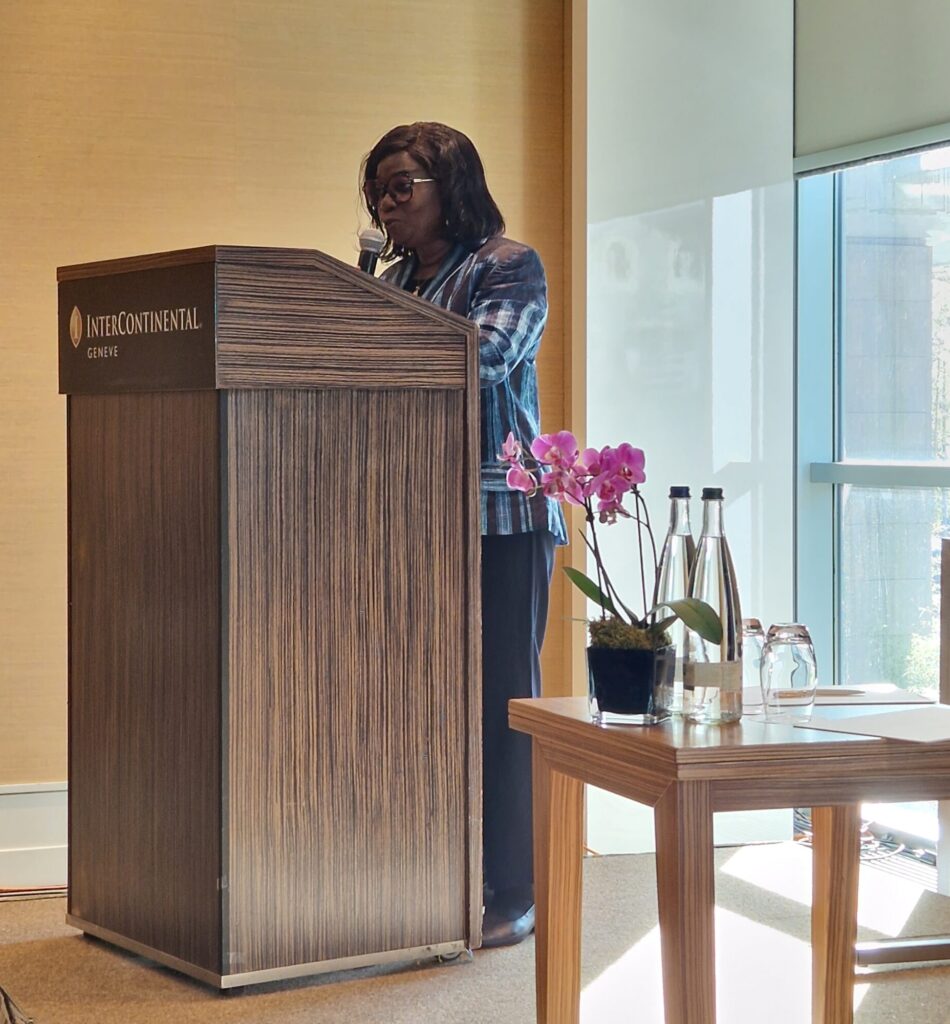
Ganatra commended Benin’s trailblazing role in changing its legislative framework to make care accessible. She also reminded the audience how long the medical consensus has existed, noting that the World Health Assembly first recognised unsafe abortion as an important public health problem back in 1967, with the latest WHO Abortion Care Guidelines coming out in 2022 and providing states with a clear, evidence-based roadmap for national implementation.
West and Central African Leadership in Action
Next the conversation shifted to research. After a short animation video on Rutgers’ research in the region (from She Makes Her Safe Choice programme), showing the maze women are facing when trying to access safe care, the lead researcher from APHRC in Benin joined remotely. Audrey Sémévo Eunice Amoussou highlighted the persistent barriers that women and girls in Benin still face: “Women and girls in rural areas are still struggling to access safe abortion care, in spite of the efforts of the government and civil society. Access to information, a lack of knowledge about the legislation due to limited dissemination, misinformation, and economic constraints all continue to reduce women’s access to safe healthcare.”
Fatou Janssen from MSI Reproductive Choices, who moderated this segment of the event, noted that while laws change, shifting realities takes time: “The change in law in Benin really made a difference. It doesn’t mean the problems are all solved – no, it is just a starting point. But research reveals that compared to previous data, the number of women accessing safe abortion has increased significantly, and that’s really amazing.”
Shifting focus to Central Africa, Dr Anne-Marie Tumba, Director of the Programme National de la Santé Reproductive (PNSR) for the Government of DRC, shared via a pre-recorded video message the concrete steps her country has taken to operationalise the Maputo Protocol, specifically Article 14.2, which guarantees the right to safe abortion: “The Ministry of Health and Ministry of Gender have organised several dialogues… to develop the national roadmap to implement the Maputo Protocol… The Ministry of Public Health has taken advantage of the Protocol to develop the very first standards and guidelines for women-centred abortion care, aligned with the WHO guidelines.”
Importantly, she shared how the DRC has updated its essential medicines list to include Mifepristone and Misoprostol, integrating them into the Ministry of Public Health’s annual procurement plan to ensure availability in both public health facilities and pharmacies.
Following on, Dr Thierry Lawale, Director of Maternal and Child Health and Obstetric Care at Benin’s Ministry of Health, further unpacked how Benin has rolled out activities to combat maternal mortality, including action plans for emergencies like postpartum bleeding by setting up new guidelines for early diagnosis and supplying specialised pressure bandages. He also emphasised that alongside ensuring safe care is available at a woman’s request, the government is focusing on prevention and family planning to stop unintended pregnancies before they happen.
Finally, moving the focus to Niger, Marie Adji, Executive Director of the Association Nigérienne pour le Bien-Etre Familial (ANBEF), shared how the country is advancing reproductive rights: “The legal framework in Niger was expanded very recently – in February 2026. It now allows abortion for women and girls when a pregnancy results from rape or incest… It is a very exciting step forward, but it also presents a lot of challenges.”
She went on to explain that turning this legal shift into real access requires overcoming many hurdles: clarifying the new ruling across all state-level legal texts, integrating new protocols and training healthcare professionals, shifting social norms by working with religious and traditional community leaders, and continuously expanding local and national advocacy to protect and build on these gains.
The Path Ahead
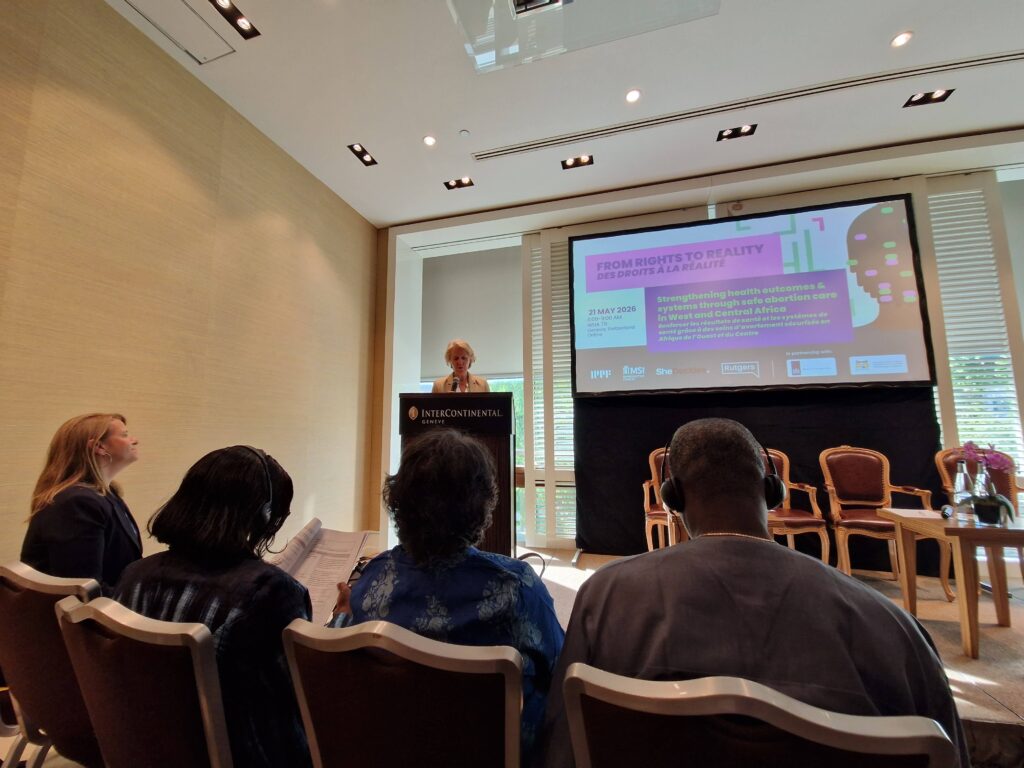
As the panel drew to a close, the room was left with a final message: safe abortion care is a fundamental human right and a public health necessity. Turning these rights into reality relies on clear political will, sustainable funding, and coordinated efforts from all parts of the movement.
Emphasising the need to carry this momentum beyond the walls of the World Health Assembly, Audrey Sémévo Eunice Amoussou closed the session with a powerful call to action: “We must continue to collaborate, to speak out, to share our experiences, support community-led innovations, facilitate access to resources, encourage participatory research, and promote inclusive partnerships. Only in this way can we together reduce inequalities and ensure accessible and sustainable services that respect women’s rights and needs in their contexts.”